
In yet another one of its initiatives, Maple Assist exclusively conducted a survey to receive feedback from some of the top studies abroad consultants, or agents as they are popularly known, with a presence across India and Bangladesh, two of the largest source countries for Canadian institutions in the region.
During these unprecedented times, it is all the more imperative to study the international education space from the perspective of agents who roughly contribute up to 90% of all enrollments in this region. This study was designed to gauge their sentiments towards the response of Canadian institutions and government, and additionally to get their comparative outlook on how other nations have been reacting faced with the same situation. We hope that the results of this survey can be factored-in by the institutions while they work on their respective recruitment and communication strategies.
One of the most critical insights that emerged from this study relates to leveraging technology in reaching out to prospective and the current pool of applicants. Other vital takeaways bear upon marketing initiatives by Canadian institutions vis à vis other study destinations, and steps taken by various governments to mitigate the effects of this pandemic on international education. Consultants’ perceptions with regard to the communication between institutions and consultants and students have also been highlighted here.
Technology
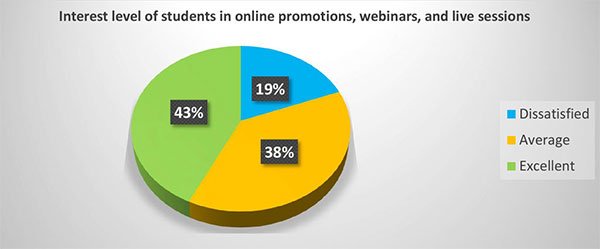
Where limitations are imposed by closed borders and restricted travel, technology and innovative marketing solutions come in handy. Close to half of the consultants said their prospective students show much interest in webinars and virtual counselling sessions. Over a quarter did not feel so, but this category of agents was found to have made little investments in digital tools. Consultants who are adopting aggressive online promotion techniques have reported a favourable response from the student as well.
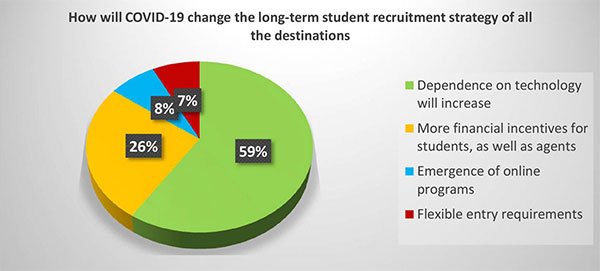
A majority of the agents believe that COVID-19 has driven institutions around the world to invest more in web-based recruitment strategies to stay ahead of the curve.